Building Fairer Partnerships in Ukraine’s Humanitarian Sector
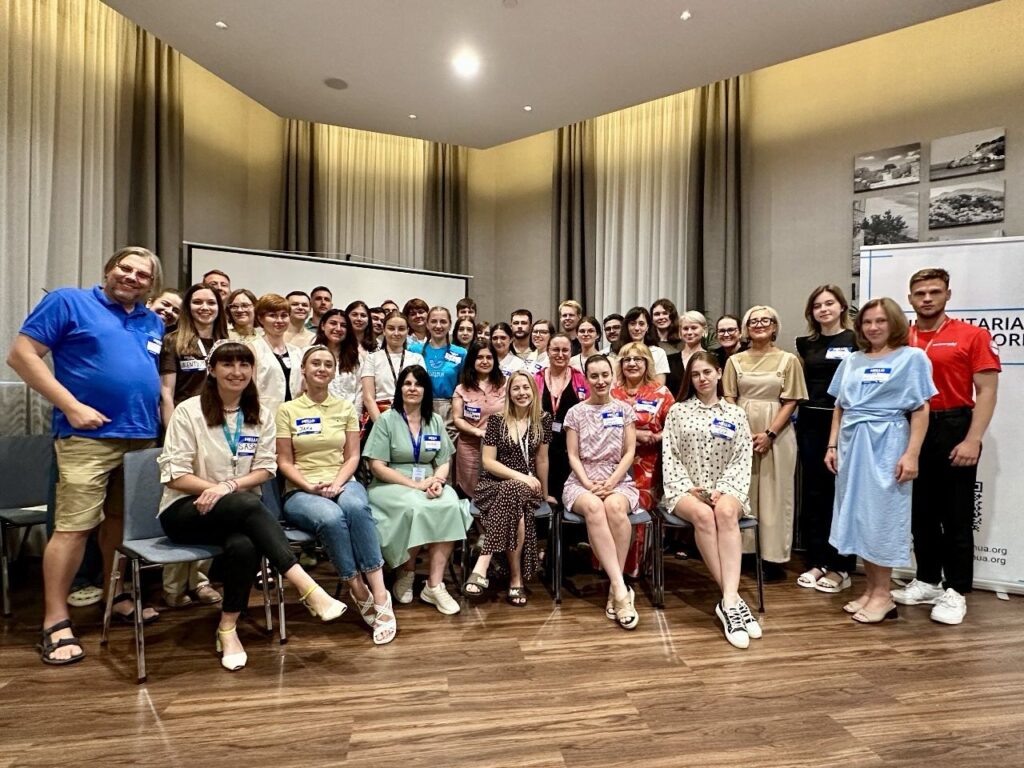
On 25 July 2025, the Humanitarian NGO Platform in Ukraine hosted a workshop in Kyiv to explore how partnerships can adapt to the global humanitarian reset. The goal was to think of locally led, collaborative models that simplify processes, share resources, and put decision-making in local hands. A special thanks to ActionAid Eastern Europe for providing funding and organizing all the procurement.
Key Discussions
Understanding the Reset
Participants reviewed the reset’s global drivers and its impact in Ukraine. They discussed how prioritization and subnational coordination can speed up localization.
Broadening Inclusion
The group urged the sector to update definitions of vulnerability. They called for more support to historically overlooked groups, such as LGBTQIA+ people, dementia patients, and the homeless. This requires challenging outdated frameworks and addressing political influences on funding.
Innovative Partnership Models
Participants explored reverse consortia, where local NGOs lead and INGOs provide support. This model increases ownership and prepares local actors for institutional funding. They also praised pooled funds for flexibility and rapid response but stressed the need for local involvement in fund design and decision-making.
Tackling Funding Barriers
Many local NGOs lack access to indirect cost recovery (ICR). Participants encouraged INGOs to advocate for fair ICR sharing and to replace one-way trainings with mutual capacity sharing. This approach builds sustainable skills on both sides.
Working with Local Authorities
Cooperation with local authorities offers potential benefits, but challenges remain, such as bureaucracy and uneven coordination. Participants suggested community profiling, referral mapping, and targeted training to strengthen collaboration.
Main Takeaways
- Shift Power: Share leadership with local actors.
- Build Sustainability: Focus on long-term, trust-based collaboration.
- Advocate: Push for ICR, inclusive funding, and better local government engagement.
- Change Systems: Encourage INGOs, donors, and coordination groups to adapt their approaches to truly support localization.
In conclusion, the workshop reinforced a clear message: equitable partnerships demand trust, flexibility, and a lasting commitment to local leadership.